





 All Categories


 Home
Home
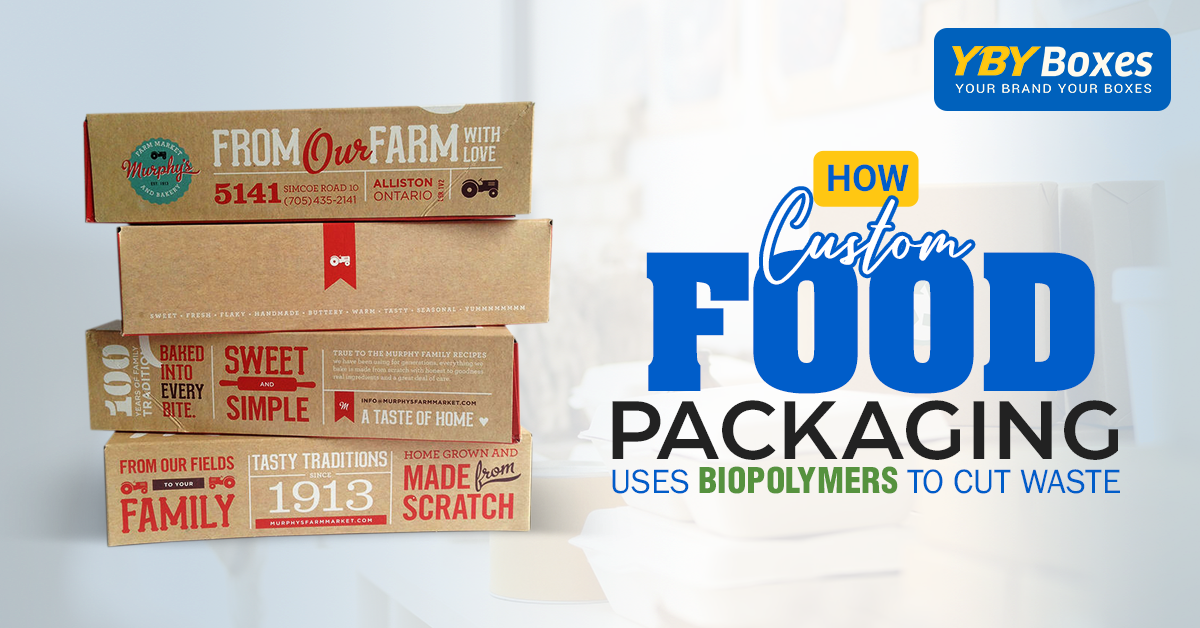
Food companies are facing growing pressure to reduce the wastefulness of their packaging. Rules are getting stricter. Buyers know better. Answers to these questions should be part of evaluations of packaging solutions, which are now as much about values as they are about protection. Custom food packaging has become a domain of innovation and accountability, especially with biopolymers.
Biopolymers are derived from renewable raw materials, such as starch from corn or sugarcane. They differ from conventional plastic as they break down faster. The trend is for cleaner waste systems. This also gives brands the ability to decrease environmental impact in the long term, while catering to niche markets like pet food boxes.
The world generates more than 140 million tons of packaging waste annually. Research indicates that the adoption of biopolymers can compress landfill volume as much as 30%. This transition is already apparent throughout frozen and fresh aisles, particularly in seafood boxes, which need moisture resistance.
Food safety is also a big issue. Biopolymers provide excellent barrier properties in the absence of heavy layers. They are lightweight and protect contents. Particular brands now prefer such products for individually served foods. Paper food trays, for example, in quick food company chains.
Custom Food Packaging and The Role of Biopolymers
Now, flexible packaging for food can take any shape, size, or texture. Usability is now all about the material. Biopolymers provide flexibility with minimal waste. They enhance heat resistance, shelf life, and composting targets in applications such as food supplement boxes.
These raw materials are very well suited for high-speed processing. Brands can shape them into rigid or semi-flexible options. This is why you can use them for dry goods and powders. Even bulk-oriented ranges, such as dog food packaging, are being produced with a smaller gauge material and still hold up well.
Another benefit is better brand coherence. Biopolymers can be printed and coated cleanly with inks. Allows for special finishes without the use of heavy lamination. Many green boxes now use this formula for wide-scale distribution.
Waste is reduced during transport, too. ADA Materials consume less energy to produce and therefore lower the overall consumption of energy. Higher palletization enhances warehousing operations. It’s important for equipment-driven categories such as food dehydrator boxes, which move in big volumes.
Custom Food Packaging Design That Supports Waste Reduction
Custom food packaging design also influences waste management. Biopolymers shape right-sized structures. Brands are not overpacking and are not risking product damage. This method is good for compact tools for those in food shredder boxes.
Design teams are also focused on mono-material solutions. Fewer layers are better for recyclability. Biopolymers tear out plastic windows and liners. This means that products like food chopper boxes that are distributed through retail chain stores are easier to dispose of.
Clarity of print is also a consideration. Transparent labelling prevents misuse and cross-contamination. When consumers are informed on how to dispose of packaging, there is less waste. This approach suits export-oriented pack styles such as Japanese food boxes.
Shelf appeal is surprisingly good for minimalism. Natural textures convey responsibility. Shoppers respond to transparency. This trend is resonating in takeaway and frozen areas such as Chinese food boxes.
Market Trends Shaping Biopolymer Packaging
Food brands are shifting to plant-based materials at scale. Cost disparities are shrinking. Governments encourage uptake with subsidies. This trend creates opportunities for greater penetration in eco-friendly boxes and short-run production.
The customization trend is also growing. Brands want packaging that communicates their purpose. Biopolymers enable clean printing and high-yield forming. This means that tailor-made printed boxes can be used both for visual and for practical purposes.
Final Words!
Biopolymers are changing the way food companies view waste. They reduce the need for conventional plastics. They facilitate both clean waste rejection and processing efficiency. With regulations and consumer expectations changing, material decisions now hold long-term value beyond protection.
YBY Boxes Canada makes it easier to switch with our thoughtfully designed boxes. We are dedicated to delivering performance, sustainability, and versatility in the Fresh, Snacks, and Food service sectors.
With knowledge of contemporary materials and structure, YBY Boxes Canada enables brands to move confidently. Contact us for more details and to receive your quote now!