





 All Categories


 Home
Home
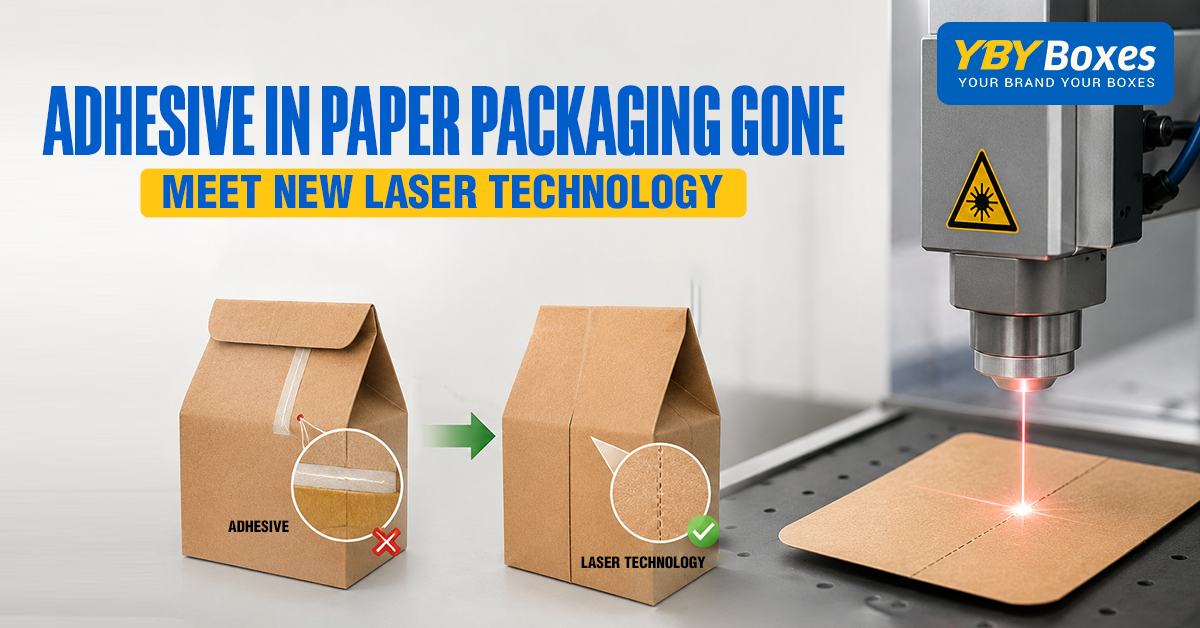
When it comes to the debate between plastic and paper, plastic is always on the losing side, and anyone would prefer paper over it. But plastic has been irreplaceable in one area, sealing. Even paper seals require plastic layers or adhesives, but the latest news holds that scientists have found a way to get rid of both.
Despite so much effort being put into eliminating the use of plastic, we somehow couldn’t get rid of it completely until now. In the past, paper packaging had always required plastic for leak-proof sealing. As paper has porous properties, it allows air to reach within the packaging and liquids to leak out.
In this blog, we are going to explain how paper packaging for food items may still contain some level of plastic. Additionally, we will also introduce the new laser technology that is about to replace the plastic seal forever. Read the blog for an in-depth analysis!
Plastic Contents in Paper Packaging
Paper packaging for any item is not completely sustainable; it may still contain plastic. For instance, juice & milk cartons are often lined with polyethylene, along with being heat-sealed to prevent leakage. Another example is the biscuits and chips packets that we often eat every day.
Have you ever noticed the edges of the packets? They have plastic films to keep moisture out so that your snack might stay crisp. Moreover, the takeaway boxes and teacups that we mostly carry to our home also feature plastic linings or seams.
Later on, after discarding the packets, the plastic makes the paper contaminated, which complicates the process of recyclability and impacts overall biodegradability.
Fraunhofer Research Team
To solve the problem and get rid of the plastic films completely, researchers from four different institutes at Fraunhofer came together under a German research organisation to work on a Papure project. The press release states that the main goal behind the project is to develop a completely laser-based heating process, enabling packaging that is adhesive-free and eliminating the need for any type of plastic usage.
It is a sequential process project that starts with examining multiple paper types to determine their suitability for the heat treatment process’s success. At this stage, a few content properties of the paper are analysed; these include hemicellulose, cellulose, lignin, and biocellulose, as they have a direct impact on the adhesive properties of the paper. The scientists use an advanced analytical characterisation technique in this process, which also helps in finding out inorganic compounds that can negatively affect laser treatment.
According to a research scientist, Robert Protz, “An excessive level of inorganic compounds such as calcium carbonate and talc has an overall adverse effect on the bond strength and adhesive properties of the seams. Additionally, thicker papers are more appropriate for binder-free sealing.”
The next step in the process is the actual innovation that helps in adhesive-free sealing. According to the research, any paper surface with a CO laser rapidly heats up and converts its primary components, such as hemicellulose, cellulose, and lignin, into a short-chain compound. It forms a meltable cleavage product that remains intact on the paper’s surface. As heat and pressure are both applied to the paper, it creates a meltable cleavage product that seals the product.
To break it down easily, the procedure uses a laser to convert bio-components that already exist on the paper into a gluey product that can easily be sealed with heat.
Unlocking Efficiency and Quality with AI and IoT
Even though laser-sealing technology is an outstanding advancement, its actual implementation and widespread adoption require a controlled environment and complete optimisation. And this exactly is the space where artificial intelligence and the Internet of Things (IoT) play their role, enhancing the Papure project from a simple laboratory success to a full industrial powerhouse. Incorporating both of these technologies into the manufacturing unit provides efficiency, precision, and consistent quality; additionally, it addresses the complicated parameters that are used in laser sealing.
For instance, high-resolution cameras continuously keep an eye on any imperfections on the laser-sealed packaging. These technologies are great at eliminating human error and reducing waste by identifying issues and rectifying them instantly. Companies like GE Digital, Siemens & IBM are delivering AI & IoT solutions proficiently and assisting in streamlining the manufacturing environment.
Growth Potential and Industry Influence
This laser-sealed technology can be used across numerous sectors, spanning from food & beverage all the way to pharmaceutical packaging. Moreover, it can also greatly impact the e-commerce industry and co-related consumers.
- Cost-Cutting: It will provide a simplified recycling process and reduce the need to rely on expensive adhesives.
- Strengthened Product Quality: The new seals will be stronger and more consistent, which will lead to less spoilage along with limited product damage.
- Enhanced Brand Image: Plastic-free, paper-based packaging represents a stronger brand image and also fulfils ecological responsibility, attracting new customers.
Wrap Up
The development of laser-sealed paper packaging is an amazing innovation that would help elevate the use of sustainable packaging to a great extent. Integrating the power of laser technology along with an AI and IoT system for optimizing industries is a big move towards a green and more advanced future for packaging.
Here at Your Brand Your Boxes Canada, we are also shifting to future-ready technologies for packaging, and we completely support striving together for a greener Canada. Check out our Kraft boxes and email us for a quick chat.
Thank you for reading our blog!