





 All Categories


 Home
Home
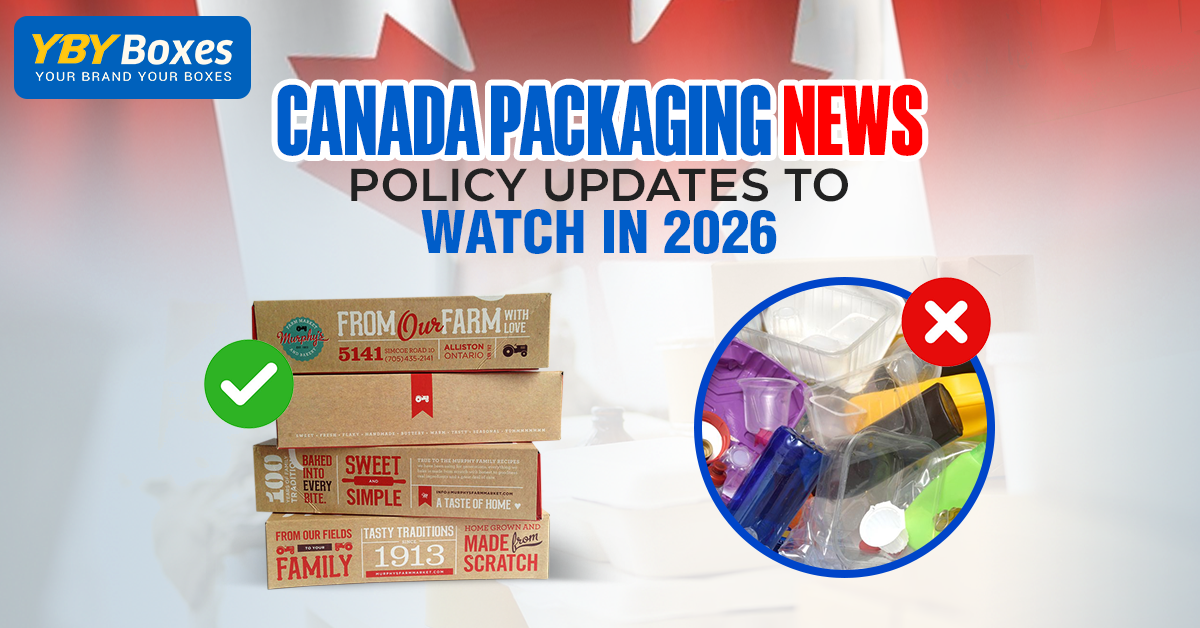
A lot has been happening in the Canadian packaging industry since the beginning of 2026. From the evolutionary regulations forwarded by Extended Producer Responsibility (EPR) for upgrading the packaging to introducing new plastic policy rules, all the way to the pending CUSMA review! The Paper and Paperboard Packaging Environmental Council (PPEC) is all set to watch over the packaging boxes industry and start implementing penalties for any non-compliance.
A recent update by the Federal Court of Appeal was published on January 30, 2026. The federal government has made it mandatory to list plastic-manufactured items as ‘toxic’ under the Canadian Environmental Protection Act (CEPA). And Canada’s single-use plastics prohibition regulations still remain in effect, banning the manufacture and sale of single-use plastic items.
In this blog, we are going to break down the latest Canada packaging news and the latest recycling policy updates of 2026. Let’s begin!
Updated Plastics Policies
Canada’s plastics policy framework is still developing and is transitioning with time. As the Single-Use Plastics Prohibition Regulations remain intact, the law continues to be challenged. As the debate of ‘plastic manufactured items’ deemed as toxic under the Canadian Environmental Protection Act (CEPA) is still under discussion, the federal court’s final decision still remains pending under the Coalition v. Canada in Responsible Plastic Use.
Although the appeal is still intact and the ban remains in action, the ambiguity makes it harder for all businesses to make a final decision regarding upgrading their packaging line or even upgrading their machinery.
It is also forecasted that the UN Global Plastics Treaty’s discussions and negotiations will continue throughout 2026.
EPR Regulations
EPR is an acronym of Extended Producer Responsibility, which is a policy where manufacturers are operationally and financially responsible for the management of the recycling of their packaging material. The policy is evolving and reaching all cities in Canada, while the USA is also ahead in implementing the new EPR regulations. But the policy updates are rapidly increasing challenges and costs across the packaging industry.
The Blue Box programme is still making waves, especially in Ontario, where obligated producers are accountable in front of the government for sponsoring the recycling of residential & paper packaging, financially & operationally.
EPR is not a simple policy, but it’s quite tough to implement. It’s a hot topic being discussed all over the country, and media coverage alone cannot capture its full complexity. As EPR reshapes the recycling system, the policy is still expected to be a widely discussed issue in 2026.
(CUSMA) Canada-US-Mexico Agreement
Although trade policy is not linked with environmental policy, it can still have some impact on packaging decisions and recycling systems. Any potential tariffs on trade might influence sustainability planning, supply chains and environmental outcomes as well. CUSMA is all set for its first six-year joint review in the upcoming July.
Despite the fact that the review will not directly impact any recycling regulations, it is expected to have an effect on sustainability planning and recycling systems.
Sustainability Claims
PPEC still continues to look after developments related to sustainability claims in Canada and is currently implementing the federal budget 2025, whose main objective is to amend some greenwashing provisions under the federal Competition Act. One of the changes included removing the rule that all environmental claims must follow globally recognised rules.
The former commissioner, Matthew Boswell, concentrated heavily on preventing ‘greenwashing’, which, in simpler terms, means making deceptive environmental advertising or false promises related to sustainability. Due to the approval of these regulations, there is still ambiguity about how these claims will be checked, balanced and implemented in the future.
Businesses are now advised to stay alert and continuously review their products’ packaging, list of ingredients and any eco-friendly claims that are supported by evidence and are accurate.
What Measures Should The Plastic And Packaging Industries Take Now?
As the policy framework continues to evolve, the stakeholders across the plastics and packaging value chain seek to protect their sector’s priorities.
Even though the final verdict of the court is unclear, a big question remains an open mystery for the whole packaging industry. Would it be better to focus on optimising the recycling and designing products for reuse or finding better ways to produce and manage the materials, rather than spending time on filing lawsuits and allocating funds for such legal activities?
Even though packaging plays a key role in preserving the products, providing transparent information, and facilitating transportation, keeping an eye on environmental and health benefits should simply never be ignored. The bigger question is not whether their product has any value, but whether it is designed to limit any potential harm to human health or our environment.
Conclusion
Both CIAC’s viewpoints and the federal government’s decision point towards one solution: crafting products for a sustainable lifecycle, strengthening recycling systems, and introducing innovative technologies that help boost sustainability.
Businesses in 2026 should focus more on shifting from dispute resolutions to investing more time and money in innovation, technology, and improving the overall recyclability of packaging for better health outcomes. In this blog, we have broken down the key Canada packaging news updates & trends of 2026. Here at Your Brand Your Boxes Canada, we also prioritise sustainability and have a variety of eco-friendly packaging available. Please visit our website.